
作者:建石丁
来源:原创
时间:2026-08-26
阅读:605 次
腾讯视频
28人目で決着したPK戦「初めて見た」 20分の死闘…衝撃の”14-13”で「すごいこと起きてる」_我的网站

A | 明治安田J2・J3百年構想リーグの第3節が各地で行われ、沖縄県総合運動公園陸上競技場でFC琉球とレイラック滋賀が対戦。
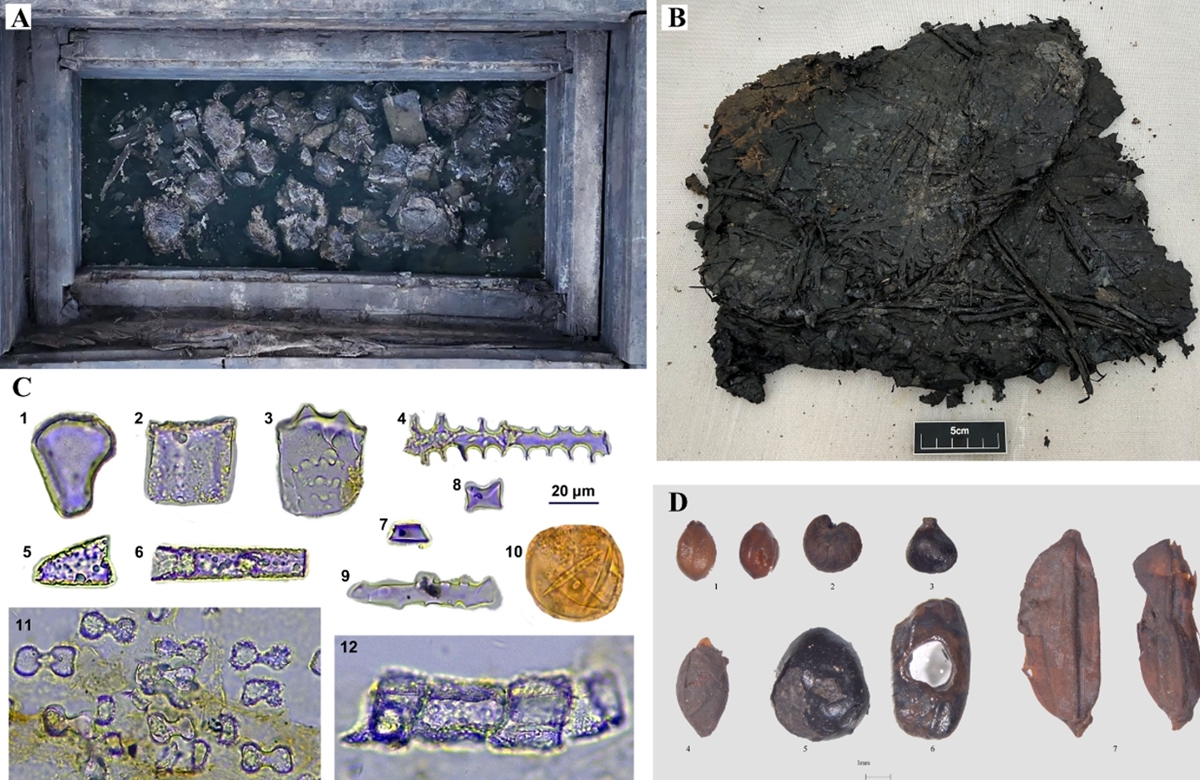
In March 2024, archaeologists from the National Center for Archaeology excavated a large number of well-preserved, waterlogged plant bundles from the tomb's outer coffin chamber. On-site, the plant bundles could be seen tightly wrapped in broad leaves and tied with plant-fiber cords.
A team of researchers led by the National Center for Archaeology, IVPP, and the Chinese Academy of Social Sciences examined 12 of the bundles and found that the wrapping leaves came from oak trees, while the cords were made from grasses.
The bundles mainly contained rice, broomcorn millet, foxtail millet, and cereal seeds, most of which were still in their husks and mixed with inflorescence material. Small amounts of peppercorn, mallow and rice-field weed seeds were also found.
The fact that the bundles were found in a tomb and mainly contained grains still in their husks suggests they were not everyday food, but offerings intended for funerary rituals. "This might reflect a Warring States-era belief that grains served as wealth for the dead in the underworld," Ge Yong, an associate researcher at the IVPP and the study's corresponding author, told the Global Times.
A Qin Dynasty (221BC-206BC) text describes a belief that "soybeans were gold and millet was money" for the dead, indicating that grains held symbolic significance in funerary culture. "The bundles therefore appear to have been ritual offerings prepared for the deceased," Ge said, "not food for the living."
The physical structure of the bundles also resembles that of zongzi, with grains wrapped in leaves and tightly secured with plant-fiber cords. "Similar practices of wrapping grains for burial have also been found elsewhere within the Chu cultural sphere," Ge said, "such as at the Chengyangcheng Site."
At the Chengyangcheng archaeological site in Henan Province, rice and broomcorn millet were also discovered wrapped in oak leaves. "An interesting fact is that we can still find zongzi wrapped with the same oak leaves now in regions related to the Chu cultural sphere."
"The findings suggest that wrapping grains as funerary offerings was a relatively common practice in the Chu state during the Warring States period," Ge said. "And this practice may have been an early form of the zongzi later associated with the legend of Qu Yuan."
These plant bundles share a structure similar to that of modern zongzi and to those described in legends and folklore. This might reflect how, through cultural exchange and heritage, these 2,200-year-old plant bundles likely evolved over centuries, shifting from sacrificial offerings to food, said Ge.
As diverse regional populations adapted the practice, it eventually transformed into the well-known Dragon Boat Festival tradition of eating zongzi. Thus, this structural resemblance might suggest a potential historical lineage; however, experts stressed that the Wuwangdun bundles should not simply be labelled as ancient zongzi.
"We can't define these plant bundles as the earliest zongzi, but rather, we can confirm that by 2,200 years ago at the latest, the Chu region had established a tradition of using this specific form of plant bundles for funeral rites. And this tradition could be a possible origin or precursor of the well-known zongzi," said Ge.
He added that the discovery provides critical physical evidence to explore the origins of zongzi and its cultural heritage.
。0-0のままPK戦に進み、28人がキッカーを務めたなか「初めて見た」「すごいこと起きてる」など注目を集めている。【実際の映像】「まさに死闘」20分超えのPK戦が決着した衝撃スコア 公式入場者数1,647名が見守った一戦は、PK戦で決着を付けることになったが、両チーム最初の5人は連続で成功。ここからも両チームの選手達はシュートを決め続け、11名全員が一巡目を成功した。キッカーも2巡目に周り、滋賀の14番手を務めたDF宮城雅史のシュートがクロスバーに嫌われ、琉球はDF鈴木順也が成功。14人全員がPK成功となった琉球が14-13で勝利し、勝ち点2を積み上げた。 SNSでは、「普通に接戦だった」「結局両キーパー合わせて28本とも、自分では止められなかったのか…」「28人目で決着とかマジで心臓持たん…!」「まさに死闘」「初めて見た」「すごいこと起きてる」といった声が寄せられ、約20分間で決着がついたPK戦に注目が集まっていた。

B |
Current article:http://qzvyrb.fanfutaopoulaxiong.pics/is8/4ephk.html
Published on:15:41:32


